21 Oct

August Jobs Report Beat Expectations by Dr Sherry Cooper

General

Posted by: Liz Fraser

August Jobs Report Beat Expectations
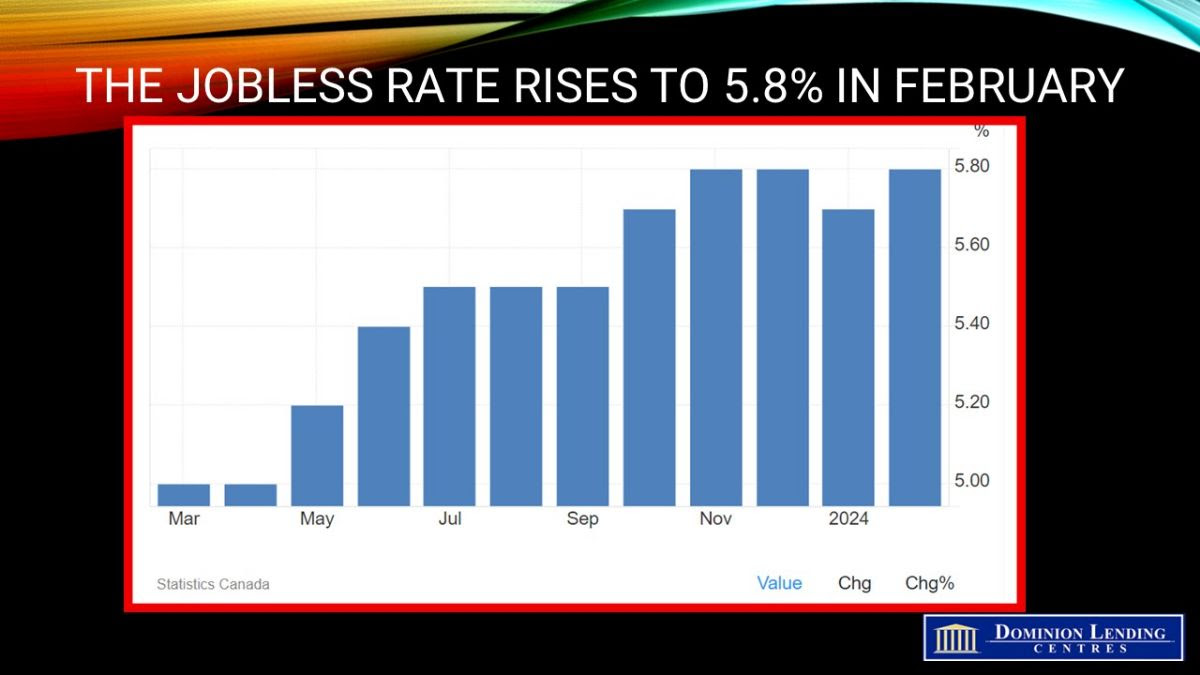
Following a marked decline in employment in July, Statistics Canada reported a gain of 40,000 net new jobs in August. Hiring increased in professional, scientific and technical services and construction and declined in educational services and manufacturing. Population growth outpaced the growth in net new employment, depressing the employment rate to 61.9%.
The unemployment rate in Canada was at 5.5% in August, unchanged from the 18-month high from the previous month and slightly below the market estimate of 5.6%. The data consolidated evidence of some softening in the Canadian labour market since the prior year, but the jobless rate remains well below pre-pandemic averages, and the labour market is tight compared to historical levels. Nevertheless, job vacancies are trending downward, and the ratio of unemployment to job vacancies is rising.

Since the beginning of the year, average monthly employment gains are running at about 25,000, while the working age population is growing at 81,000. The surge in immigration warrants a larger than historically normal pace of job growth to maintain any given level of unemployment.

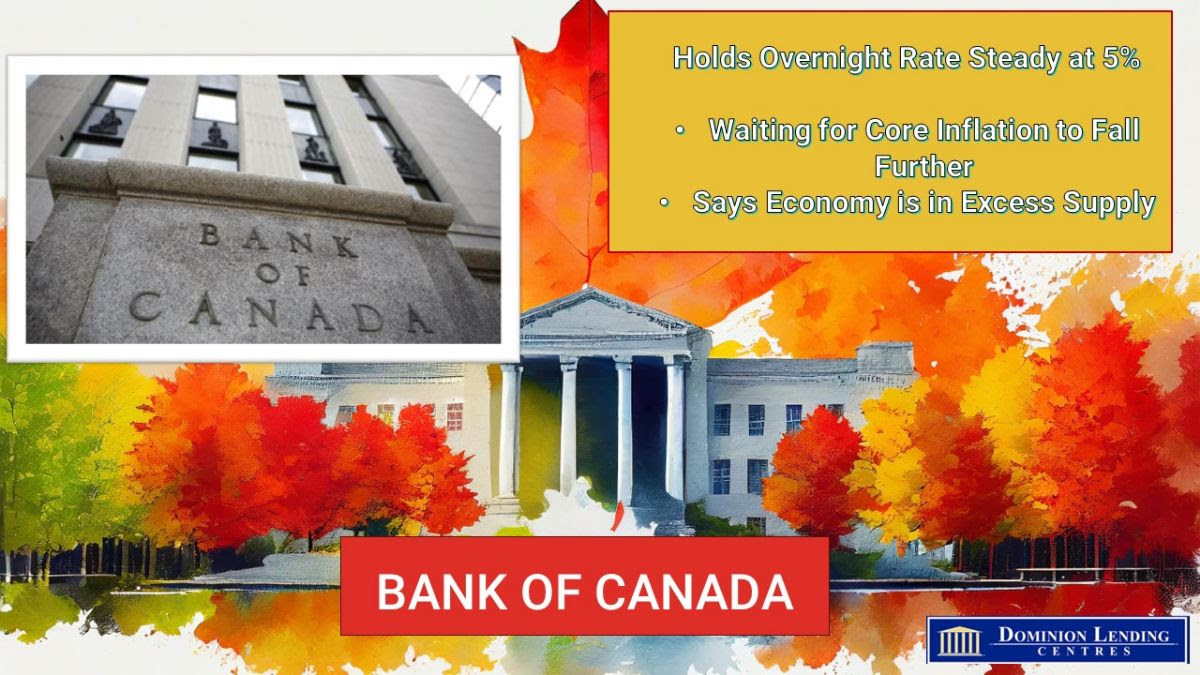
The Bank of Canada paused rate hikes last week saying that excess demand is falling. Today’s employment growth–though stronger than expected–is consistent with that point of view.

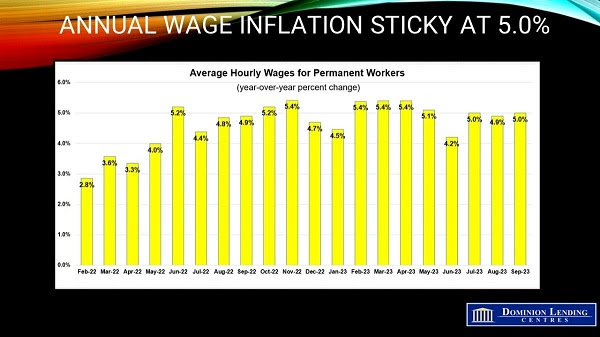
Policymakers will continue to scrutinize incoming economic data to determine if the current interest rates are sufficiently high to return inflation to 2%. They are particularly concerned about substantial wage gains, which perpetuate the wage-price spiralling. Today’s release showed year-over-year wage increases of 4.8%, only slightly below last month’s reading. But with the increasing number of new labour-market entrants, wage pressures are likely to diminish in coming months.
Bottom Line

The next BoC announcement date is October 25. There is another Labour Market Survey and two CPI reports before that date, but anecdotal evidence suggests that the economy is indeed slowing and we are near the end of the monetary tightening rate cycle.

Dr. Sherry Cooper
Chief Economist, Dominion Lending Centres
drsherrycooper@dominionlending.ca
21 Oct

Rate Hikes Are Definitely Off The Table by Dr Sherry Cooper

General

Posted by: Liz Fraser

Rate Hikes Are Definitely Off The Table
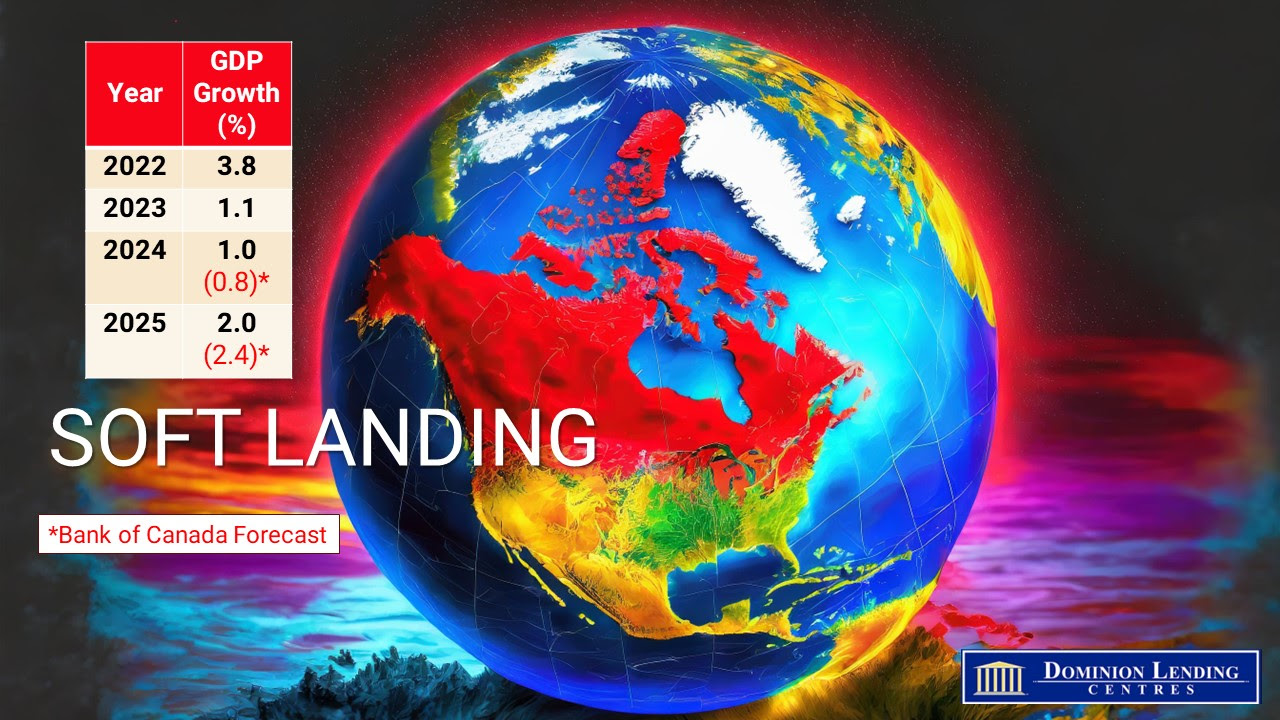
The Canadian economy weakened surprisingly more in the second quarter than the market and the Bank of Canada expected. Real GDP edged downward by a 0.2% annual rate in Q2. The consensus was looking for a 1.2% rise. The modest decline followed a downwardly revised 2.6% growth pace in Q1. (Originally, Q1 growth was posted at 3.1%.) According to the latest monthly data, growth dipped by 0.2% in June, and the advance estimate for economic growth in July was essentially unchanged. This implies that the third quarter got off to a weak start.

The Bank of Canada forecasted growth of 1.5% in Q2 and Q3 in its latest Monetary Policy Report released in July. The central bank is now justified in pausing interest rate hikes when it meets again on September 6th. Today’s report is consistent with the recent rise in unemployment. It suggests that excess demand is diminishing, even when accounting for such special dampening factors as the expansive wildfires and the BC port strike.

Some details of Q2 Growth

Housing investment fell 2.1% in Q2, the fifth consecutive quarterly decline, led by a sharp drop in new construction and renovations. No surprise, given the higher borrowing costs and lower demand for mortgage funds, as the BoC raised the overnight rate to 4.75% in Q2. Despite higher mortgage rates, home resale activity rose in Q2, posting the first increase since the last quarter of 2021.

Significantly, the growth in consumer spending slowed appreciably in Q2 and was revised downward in Q1.

Bottom Line

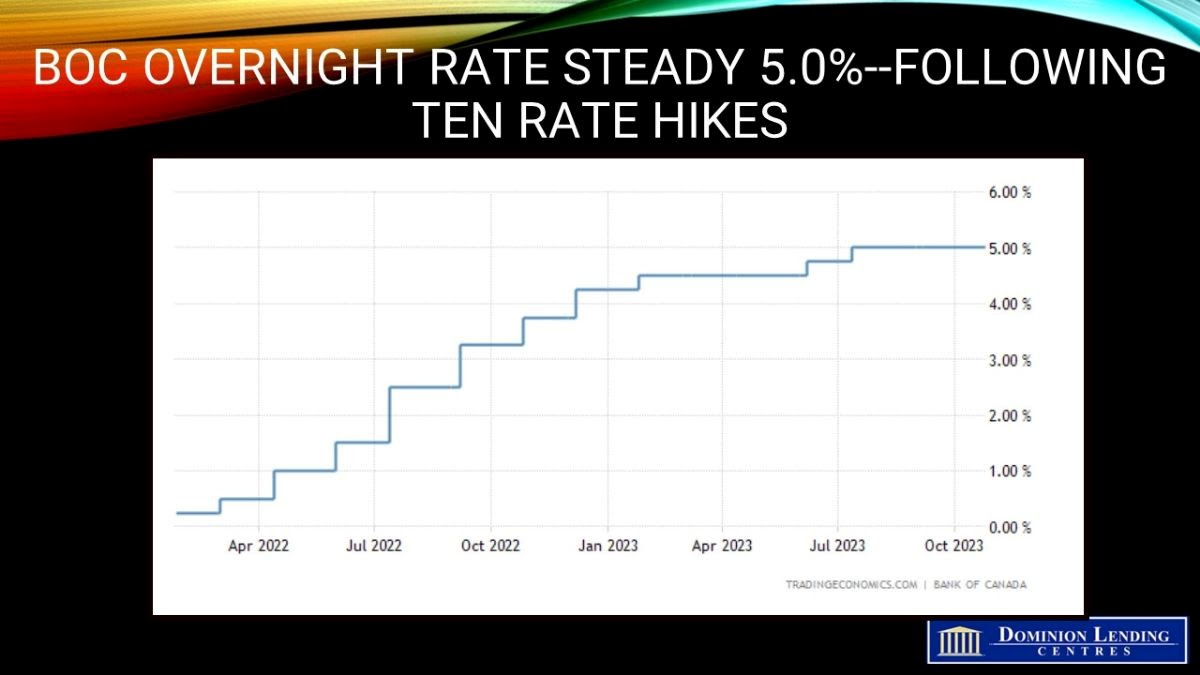
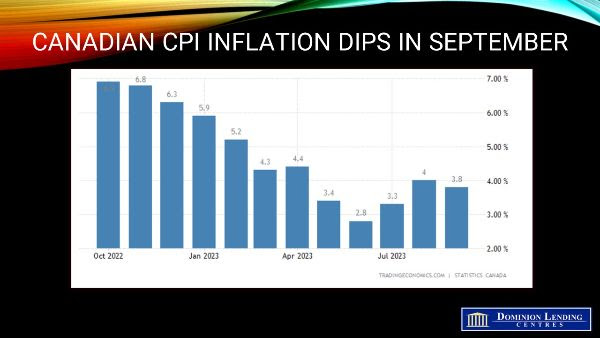
The weakness in today’s data release may be a harbinger of the peak in interest rates. Inflation is still an issue, but the 5% policy rate should be high enough to return inflation to its 2% target in the next year or so. As annual mortgage renewals peak in 2026, the increase in monthly payments will further slow economic activity and break the back of inflation.

The Bank of Canada will be slow to ease monetary policy, cutting rates only gradually–likely beginning in the middle of next year. In the meantime, the central bank will continue to assert its determination to do whatever it takes to achieve sustained disinflationary forces.

Today’s release of the US jobs report for August supports the view that the Canadian overnight rate has peaked at 5%. (The Canadian jobs report is due next Friday). Though the headline number of job gains in the US came in at a higher-than-expected 187,000, the unemployment rate rose to 3.8% as labour force participation picked up, growth in hourly wages was modest, and job gains in June and July were revised downward.

In Canada, 5-year bond yields have fallen to 3.83%, well below their recent peak shown in the chart below.

Dr. Sherry Cooper
Chief Economist, Dominion Lending Centres
drsherrycooper@dominionlending.ca