17 Jan

Canadian Existing Home Sales Fell Again in December

General

Posted by: Liz Fraser

Housing Activity Fell in December, Rounding Out A Disappointing Year
Today’s release of December housing data by the Canadian Real Estate Association (CREA) showed the market ended 2025 with declining sales and prices due to ongoing economic uncertainty.

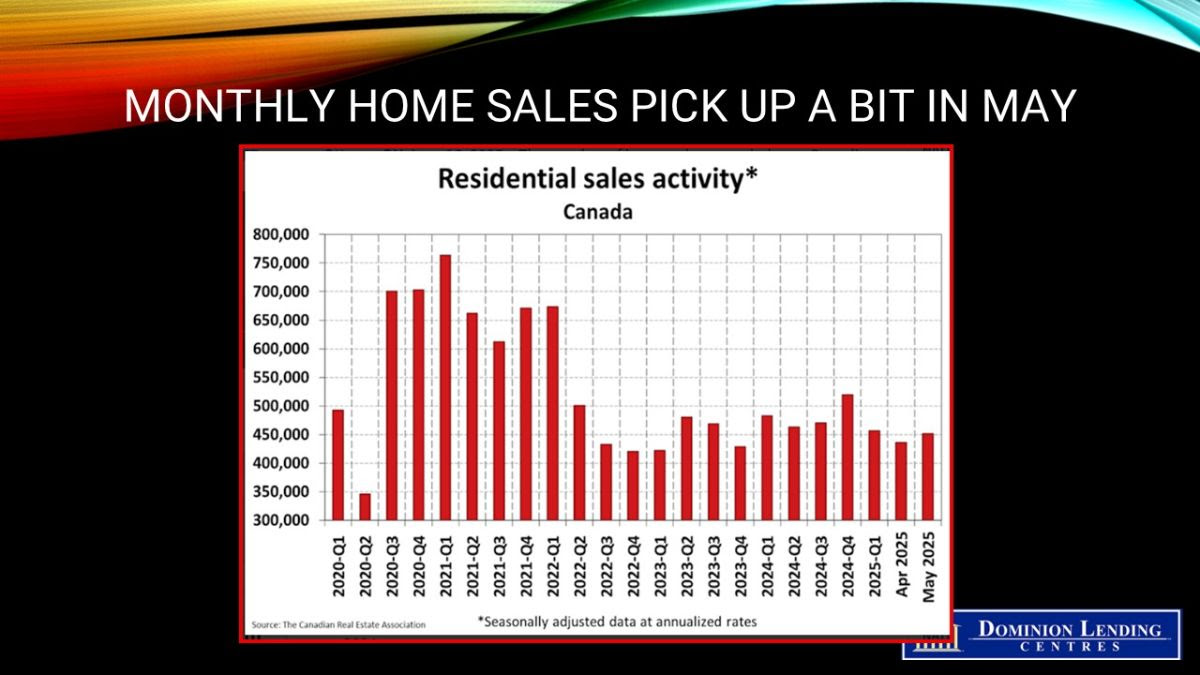
The number of home sales recorded over Canadian MLS® Systems declined 2.7% m/m in December. On an annual basis, transactions totalled 470,314 units last year, a 1.9% decrease from 2024, despite a series of Bank of Canada rate cuts.

“There doesn’t appear to have been much rhyme or reason to the month-over-month decline in home sales in December, which was simply the result of coincident but seemingly unrelated slowdowns in Vancouver, Calgary, Edmonton, and Montreal,” said Shaun Cathcart, CREA’s Senior Economist. “For that reason, it would be prudent for market observers to resist the temptation to trace a line from the end of 2025 into 2026. Rather, we continue to expect sales to move higher again as we get closer to the spring, rejoining the upward trend that was observed throughout the spring, summer, and early fall of 2025.”

New Listings

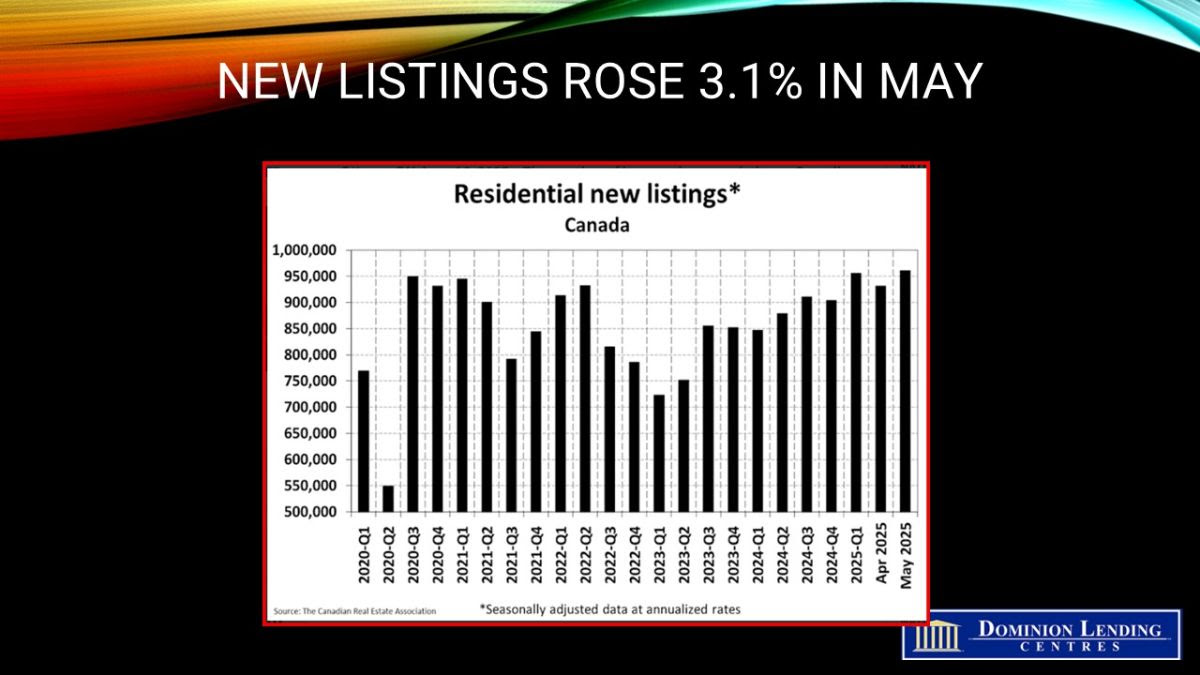
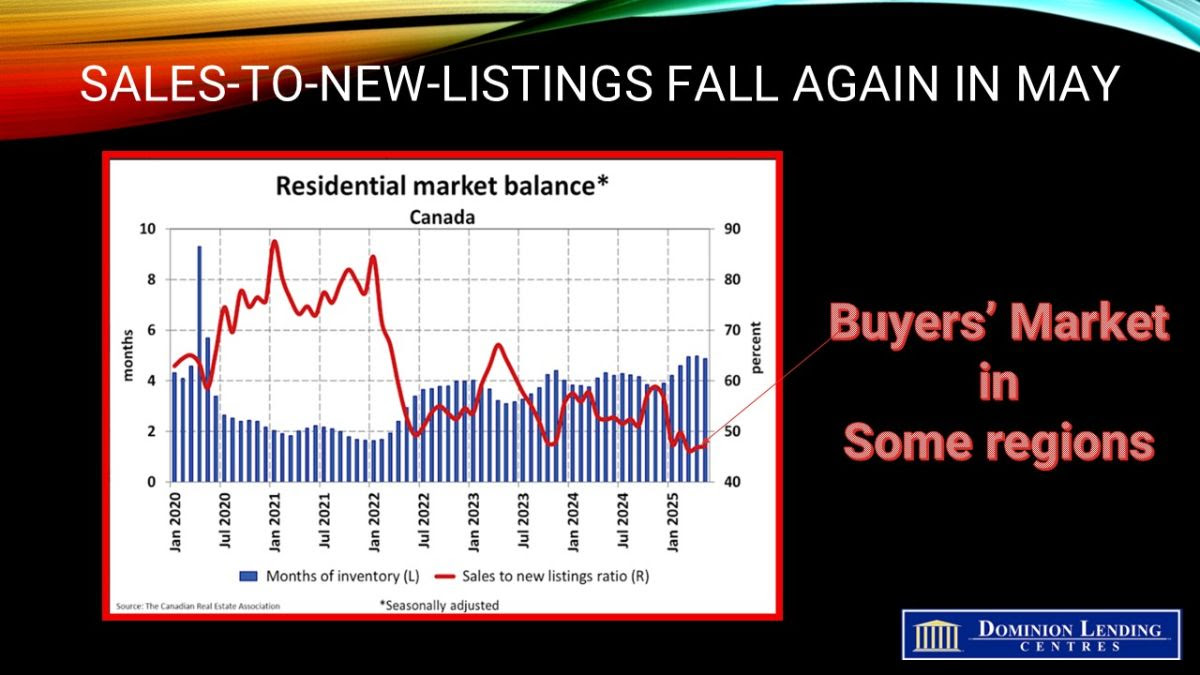
New supply declined by 2% on a month-over-month basis in December, marking a fourth straight monthly drop. Combined with a slightly larger decrease in sales activity in December, the sales-to-new-listings ratio eased to 52.3% from 52.7% in November. This remains close to the long-term average national sales-to-new listings ratio of 54.9%. Readings roughly between 45% and 65% are generally consistent with balanced housing market conditions.

There were 133,495 properties listed for sale on all Canadian MLS® Systems at the end of December 2025, up 7.4% from a year earlier but 9.9% below the long-term average for that time of year. Inventories have been falling since May 2025 owing to the mid-year rally in demand, meaning active listings could be back posting year-over-year declines around the time this year’s spring market gets going.

“While we remain in the quiet time of year for a little while longer, the spring market is now just around the corner, and it is expected to benefit from four years of pent-up demand, and interest rates that at this point are about as good as they are going to get,” said Valérie Paquin, CREA Chair. “Barring any further major uncertainty-causing events, that means we should see a more active market this year.”

There were 4.5 months of inventory on a national basis at the end of December 2025, up slightly from 4.4 months, which had been the measure since August. The long-term average for this measure of market balance is 5 months of inventory. Based on the measure of one standard deviation above and below that long -term average, a seller’s market would be below 3.6 months, and a buyer’s market would be above 6.4 months.

Home Prices

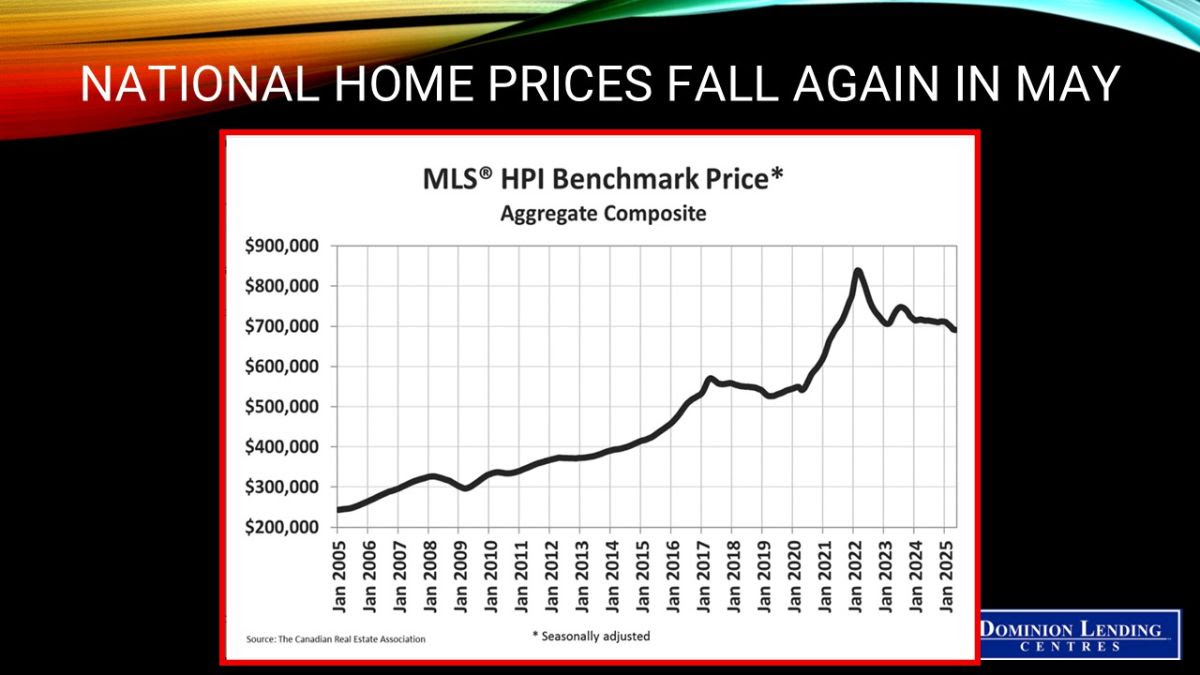
The National Composite MLS ® Home Price Index (HPI) fell by 0.3% between November and December 2025. It was similar to the dip recorded in November and could reflect some sellers making price concessions to sell properties before the end of the year. Most of the overall price softening in December came from markets in Ontario’s Greater Golden Horseshoe region, which was hit hard by US tariffs.

The non-seasonally adjusted National Composite MLS® HPI was down 4% from December 2024. Under the surface, year-over-year declines are larger for condo apartments and townhomes, and smaller for one- and two-storey detached homes.

Bottom Line

Today’s data end a year that saw house prices drift lower despite falling interest rates, as a simmering trade war with Canada’s largest trading partner caused higher unemployment and considerable job uncertainty. Though US tariffs apply to a limited volume of Canadian goods, and the economy didn’t tip into a recession, the unpredictability of President Donald Trump’s trade policy has stoked a sense of economic insecurity.

In some regions, the price decline has now wiped out a sizable proportion of the gains homeowners saw during the torrid Covid market from 2020 to 2022, when overnight interest rates were reduced to a record-low 25 basis points. Back then, ultralow interest rates caused home prices to surge, particularly in smaller cities to which remote workers fled to take advantage of a lower cost of living.

Vancouver and Toronto remain by far the most expensive large cities. The benchmark price in Greater Vancouver was C$1.14 million in December. In the Toronto region, it was C$962,300 – down about 6% from a year earlier.

With many regional markets soft, sellers are now pulling back. New listings dropped 2% in December from the previous month, the fourth straight monthly decline. But the total number of homes on the market last month was still 7.4% higher than the previous year. That’s the equivalent of about 4.5 months of inventory.

We concur with the view that there is considerable pent-up demand among potential first-time buyers who will likely dip their toe in the market once winter passes. This year, we also see a record volume of refinances and renewals, which will increase monthly mortgage payments and dampen household purchasing power.

Dr. Sherry Cooper
Chief Economist, Dominion Lending Centres
drsherrycooper@dominionlending.ca
17 Jan

Canadian Employment Rises 8,200 as the Jobless Rate Rises to 6.8%

General

Posted by: Liz Fraser

Canadian Job Growth Slows Markedly in December as the Unemployment Rate Rises to 6.8%
Today’s Canadian Labour Force Survey for December was weaker than expected. Employment was little changed (+8200; 0.0%), and the employment rate held steady at 60.9%. This followed three consecutive monthly increases.

The jobless rate rose 0.3 percentage points to 6.8%, as more people searched for work. The increase in the unemployment rate in December partially offsets a cumulative decline of 0.6 percentage points in the previous two months. Employment rose among people aged 55 and older, while it fell among youth aged 15 to 24.

Full-time employment rose by 50,000 (+0.3%) in December, while part-time employment fell by 42,000 (-1.1%). The decline in part-time work in the month partially offsets a cumulative gain of 148,000 (+3.9%) in October and November. Over the 12 months to December 2025, part-time employment rose at a faster pace (+2.6%; +99,000) than full-time employment (+0.7%; +128,000).

In December, there was little change in the number of private- and public-sector employees, as well as in the number of self-employed workers.

There were 1.6 million people unemployed in December, an increase of 73,000 (+4.9%) from November.

The participation rate—the proportion of the population aged 15 and older who were employed or looking for work—rose by 0.3 percentage points to 65.4%. On a year-over-year basis, the labour force participation rate was unchanged in December. The unemployment rate for youth aged 15 to 24 rose 0.5 percentage points to 13.3% in December, as fewer youth were employed (-27,000; -1.0%). Labour market conditions had previously improved for youth in October and November, with employment rising by 70,000 (2.6%) and the youth unemployment rate falling by 1.9 percentage points over this period.

In 2025, Trump’s tariff policy and negative attitude towards Canada have caused considerable uncertainty, having a marked deleterious effect on the Canadian economic outlook, particularly in sectors dependent on US demand. Job vacancies also fell during 2025.

Bottom Line

The Bank of Canada has reiterated that its primary mandate is price stability, effectively leaving the task of closing the output gap to fiscal authorities. By early next year, it will likely become evident that fiscal support delivered through large capital projects is rolling out too slowly to offset near-term weakness in activity materially. If layoffs persist at their recent pace and the United States were to withdraw from the Canada‑US‑Mexico Agreement, the case for an additional round of monetary easing would strengthen.

Absent that downside scenario, the more plausible path is a slow and limited normalization of policy. Market pricing currently anticipates that the next move by the Bank of Canada will be to raise the overnight policy rate, but that is not likely until at least late this year.

Dr. Sherry Cooper
Chief Economist, Dominion Lending Centres
drsherrycooper@dominionlending.ca
20 Dec

Housing Beleaguered in Regions Most Impacted by over-building and tariffs

General

Posted by: Liz Fraser

Canadian Housing Market in a Holding Pattern
Today’s release of the November housing data by the Canadian Real Estate Association (CREA) showed that national home sales fell year over year, as both month-over-month new listings and the Home Price Index showed prices declined once again.

Over the past month, the consensus for Canada’s economic outlook has shifted.  It is now widely believed that the Bank of Canada will remain on the sidelines through most of 2026, and its next move will be a rate hike. In all likelihood, the big move in interest rates is behind us. Moreover, reductions in home prices have dissipated.  The hope is that buyers move begin to get serious they see interest rates and home prices bottoming.

The number of home sales recorded on the Canadian MLS® Systems declined 0.6% month over month in November, remaining well above April levels but essentially unchanged since July.

According to Shaun Cathcart, the senior economist of the CREA, “At this point it’s looking like the mid-year rally in housing demand has veered into more of a holding pattern heading into 2026, coupled with what looks like some price concessions in November in order to get deals done before the end of the year. That said, the Bank of Canada’s clear signal that rates are now about as good as they’re likely going to get is the green light many fixed-rate borrowers have no doubt been waiting for, so we remain of the view that activity will continue to pick up next year.” Many are pointing to what they think will be a much more robust spring market.”

New Listings

New supply declined 1.6% month over month in November. Combined with a more minor decrease in sales activity, the sales-to-new listings ratio tightened to 52.7% from 52.2% in October. The long-term average for the national sales-to-new listings ratio is 54.9%, with readings roughly between 45% and 65% generally consistent with balanced housing market conditions.

There were 173,000 properties listed for sale across all Canadian MLS® Systems at the end of November 2025, up 8.5% from a year earlier but 2.5% below the long-term average for that time of the year.

“2025 was initially expected to be the year that housing markets came out of their interest rate-induced hibernation, but as we all know, the rug was pulled out from under that recovery by the economic shock of U.S. tariffs,” said Valérie Paquin, CREA Chair. “With interest rates now even lower as a result of a softer economy, the focus shifts to the spring of 2026, and whether we’ll finally see the return of more normal levels of housing activity.

There were 4.4 months of inventory on a national basis at the end of November 2025, basically unchanged from July, August, September, and October. The long-term average for this measure of market balance is five months of inventory.

Based on one standard deviation above and below that long-term average, a seller’s market would be below 3.6 months, and a buyer’s market would be above 6.4 months.

Home Prices

The National Composite MLS® Home Price Index (HPI) edged up 0.2% between September and October 2025. The non-seasonally adjusted National Composite MLS® HPI was down 3% compared to October 2024, the smallest year-over-year decline since March.

The National Composite MLS® Home Price Index (HPI) fell by 0.4% between October and November, suggesting some sellers are making price concessions to get properties sold before the end of the year. The non-seasonally adjusted National Composite MLS® HPI was down 3.7% compared to November 2024.

Bottom Line

Lower interest rates and home prices bottoming should move homebuyers off the sidelines. While the Greater Golden Horseshoe’s housing activity was dampened by sectoral tariffs, trade uncertainty, and earlier overbuilding, even there, the tides are gradually turning. We can look forward to a more robust housing activity.

Canada’s housing market tends to slow as winter approaches and gradually improve, peaking in May or June. But this year is unlike any other, with tariff uncertainty hanging over the markets. As soon as the CUSMA talks begin, and it appears the US will remain in the trilateral trade accord, homebuyers will emerge from their long dormancy.

Dr. Sherry Cooper
Chief Economist, Dominion Lending Centres
drsherrycooper@dominionlending.ca
20 Dec

The Consumer Price Index (CPI) rose 2.2% on a year-over-year basis in November, matching the increase in October

General

Posted by: Liz Fraser

Good News on the Inflation Front Will Keep the BoC on the Sidelines
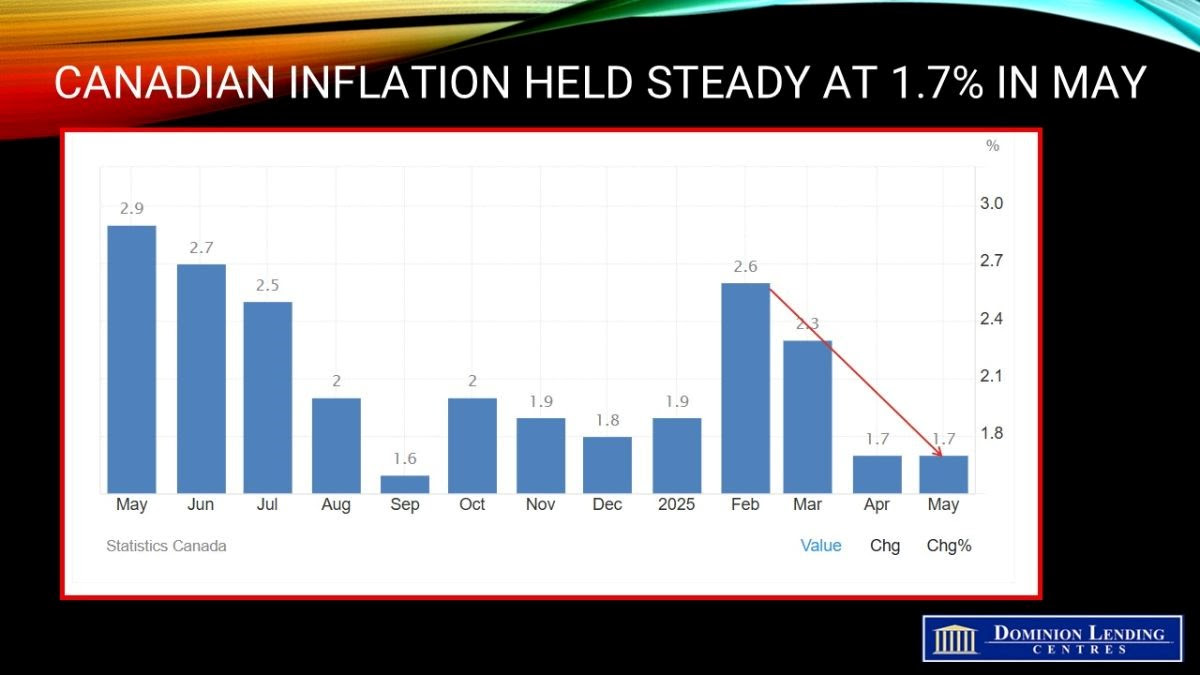
The Consumer Price Index (CPI) held steady at 2.2% year over year in November, as core inflation continued to ease. Accelerating costs for food and some other goods were offset by slowing price growth for services.

In November, prices for services rose 2.8% year over year, compared with a 3.2% increase in October. Prices for travel tours declined 8.2% last month following a 2.6% increase in October. Monthly, these prices fell 12.0%, as lower demand for destinations in the United States put downward pressure on the index.

Prices for traveller accommodation fell to a greater extent on a year-over-year basis in November (-6.9%) than in October (-0.6%). The most significant contributor to the lower prices was Ontario (-20.2%), partially due to a base-year effect from a swift monthly increase in November 2024 (+11.0%), which coincided with a series of high-profile concerts in Toronto.

Lower prices for travel tours and traveller accommodation, in addition to slower growth for rent prices, put downward pressure on the all-items CPI.

Offsetting the slower growth in services on an annual basis were higher prices for goods, driven by increases in grocery prices and a smaller decline in gasoline prices. Excluding gasoline, the CPI rose 2.6% for the third consecutive month.

The CPI rose 0.1% month over month in November. On a seasonally adjusted monthly basis, the CPI increased 0.2%.

Grocery Price Inflation Highest Since the end of 2023

Prices for food purchased from stores rose 4.7% year over year in November after increasing 3.4% in October. The increase in November was the largest since December 2023 (+4.7%). The main contributors to the acceleration in November 2025 were fresh fruit (+4.4%), led by higher prices for berries, and other food preparations (+6.6%).

In November, prices for fresh or frozen beef (+17.7%) and coffee (+27.8%) remained significant contributors to overall grocery inflation on an annual basis. Higher beef prices have been driven, in part, by lower cattle inventories in North America. Adverse weather conditions in growing regions have affected coffee prices, which have risen amid American tariffs on coffee-producing countries, contributing to higher prices for refined coffee.

On a monthly basis, grocery prices rose 1.9% in November, the largest month-over-month increase since January 2023.

Acting as a bit of a counterweight, shelter costs—the earlier inflation villain—continue to moderate. Owned accommodation expenses are now up just 1.7% y/y, the slowest pace in almost a decade amid sagging home prices. Rent inflation remains sticky, but did tick down to 4.7% y/y last month. Keep an eye on electricity prices, which have been a major issue in the US, where AI data centers consume large amounts of electricity. The cost of electricity jumped 1.5% in the month and is now up 3.4% y/y. Telephone services have also leapt recently, after falling heavily the past two years; they are now up 11.7% y/y, the fastest increase since 1982.

The good news is that inflation will average just over 2% for all of 2025, down from 2.4% last year and the lowest annual tally in five years. The less-good news is that this moderation was mainly due to the removal of the consumer carbon tax, which alone shaved about half a point off the annual average.

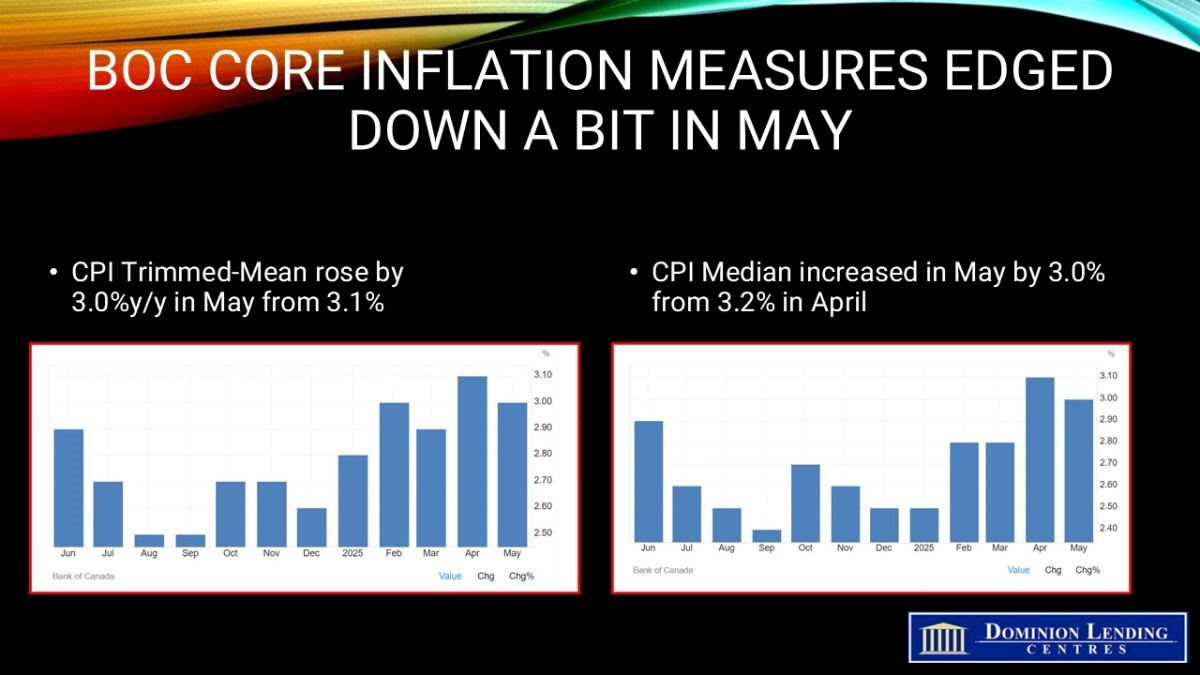
The main core inflation measures decelerated in November, with the BoC’s two measures both easing two ticks to 2.8% y/y (and both up just 0.1% m/m in seasonally adjusted terms). And, ex food & energy prices also rose just 0.1% m/m, cutting the annual rate three ticks to a moderate 2.4% y/y pace.
Bottom Line

This report confirms the Bank’s hold on the policy rate. Aside from food prices, inflation seems to be dissipating. The overall economy is in better-than-expected shape as the upward revisions in GDP since 2022 were largely the result of better than expected productivity growth–long a big concern for the Canadian economy.

The backdrop of better growth and lower inflation will keep the Bank of Canada on hold for most of 2026, as the next move in rates is likely to be a hike, but not until late next year. In the meantime, the biggest loser in the past year has been the housing market.

Today’s release of existing home sales by the Canadian Real Estate Association suggests particularly weak activity in Ontario, the region hardest hit by the tariff uncertainty. A cautious Bank of Canada will monitor the effect of rapidly rising food prices on inflation expectations. With any luck at all, core inflation will continue to decelerate, keeping the Bank on the sidelines for much of next year.

Hopefully, greater clarity on the Canada-Mexico-US agreement will be forthcoming in the New Year. Reduced uncertainty is the key ingredient required for a rebound in housing activity, particularly in the regions of Ontario and Quebec hardest hit by the tariffs.

Dr. Sherry Cooper
Chief Economist, Dominion Lending Centres
drsherrycooper@dominionlending.ca
14 Dec

Bank of Canada Holds Overnight Rate Steady at 2.25%

General

Posted by: Liz Fraser

Bank of Canada Holds Policy Rate Steady
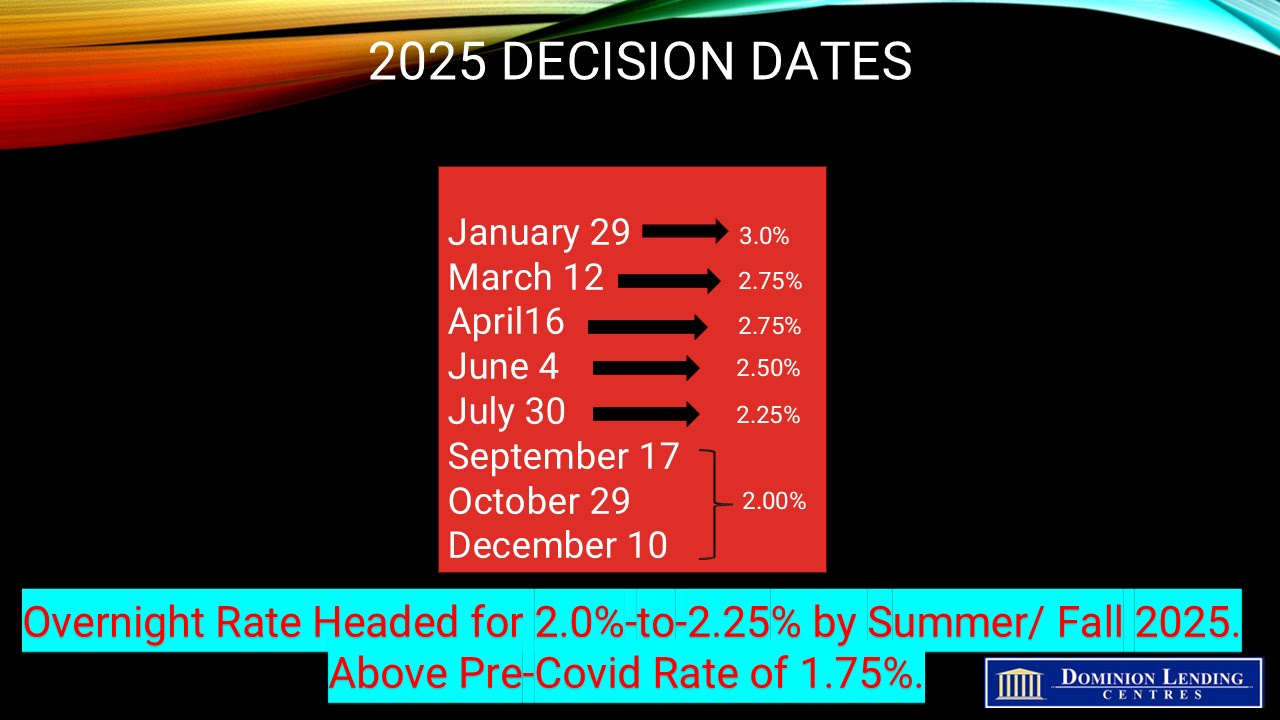
Today, the Bank of Canada held the policy rate steady at 2.25%. This is the bottom of the Bank’s estimate of the neutral overnight rate, where monetary policy is neither expansionary nor contractionary. With inflation hovering just above 2% and core inflation between 2.5% and 3%, the Governing Council sees the current overnight rate as “about right.”

According to the press release, “The Bank expects final domestic demand to grow in the fourth quarter, but with an anticipated decline in net exports, GDP will likely be weak. Growth is forecast to pick up in 2026, although uncertainty remains high and large swings in trade may continue to cause quarterly volatility.”

In the United States, economic growth is supported by strong consumption and a surge in AI investment. The US Federal Reserve is likely to cut its policy rate by 25 bps to 3.5%-3.75% as President Trump lobbies Chair Jay Powell for more dramatic rate cuts.

Bottom Line

The Bank of Canada has shown its willingness to bolster the Canadian economy amid unprecedented trade uncertainty. At the same time, Canada is working hard to establish alternative trade partners. Even the vast Chinese market cannot replace the US in terms of proximity and cost-effectiveness, given the high transport costs. China has stepped up its purchases of Canadian oil to record levels. There is no market the size of the US market to replace exports of steel and aluminum.

The US will also suffer economic impacts from withdrawing from the Canada-US-Mexico free trade deal. A renegotiation of the contract is likely to come before the end of next year. As of now, the US is signalling their desire to exit the agreement. We can only hope that cooler heads will prevail.

These are challenging times, the surprisingly strong economic data notwithstanding. Consumer and business confidence is down, and the housing market is still weak, especially in the Greater Goldeen Horseshoe.

In this environment, market-driven interest rates have risen sharply. The 5-year bond yield is once again attempting to break through 3%. The 2-year bond at 2.67% is well above the overnight rate, and the Canadian dollar is rising. Lenders have recently increased fixed mortgage rates, which will be more popular if people generally expect rates to rise.

The key to the outlook is the continuation of CUSMA. We will likely suffer several more months of uncertainty before we know the fate of the trade agreement.

Dr. Sherry Cooper
Chief Economist, Dominion Lending Centres
drsherrycooper@dominionlending.ca
5 Dec

Blockbuster jobs report blasts through expectations in November

General

Posted by: Liz Fraser

Strong Canadian Job Growth Drove the Unemployment Rate Down to 6.5%
Today’s Labour Force Survey for November blew past expectations for the third consecutive month.

The Canadian economy added 53,600 jobs in November, marking the third straight month of unexpectedly strong gains amid US tariffs that otherwise slowed activity.

Employment rose by an impressive 180,000 since September, marking the strongest three-month period for job gains since about a year ago. The employment increase has also more than reversed job losses over Canada’s summer months.

Where gains were most significant

Youth hiring led the latest gains, with employment growth heavily concentrated among those aged 15 to 24. That strength pulled the youth unemployment rate down to 12.8%, from a peak of 14.7% earlier this year, underscoring improved conditions for younger workers even as broader cyclical headwinds persist.

The employment increase last month was also driven by part-time work and the private sector. Health care and social assistance led the job gains, with employment rising by 46,000 in that sector.

Part-time positions rose by 63,000 (1.6%). Over the past three months, part-time employment has increased by 2.7% (103,000), outpacing the 0.5% (78,000) growth in full-time jobs over the same period.

Employment rate continues to trend up in November

Most part-time workers do so by choice—for example, to attend school or provide care to family members—but a meaningful minority are part-time involuntarily because of weak demand or an inability to secure full-time hours. In November, 17.9% of part-time workers were in this involuntary category, broadly unchanged from 17.6% a year earlier and slightly below the 2017–2019 average for the month (19.3%, not seasonally adjusted).

In October, 19.8% of unemployed individuals in September found jobs; this job finding rate is higher than a year ago (16.5%) but lower than 2017–2019 averages (24.6%). November’s employment growth was driven by part-time jobs (+63,000; +1.6%), which increased more rapidly over the past three months (+2.7%) compared to full-time positions (+0.5%).

What this means for the economy

Forecasters had expected a mild deterioration rather than a surge in hiring. Economists surveyed by Bloomberg were expecting a 2,500 decline in employment and an increase in the unemployment rate to 7%, making the actual print a substantial positive surprise relative to consensus.

This blockbuster report boosted the Canadian dollar and interest rates, reducing the likelihood of additional Bank of Canada easing. Traders in overnight swaps dropped bets on additional easing from the Bank of Canada. Instead, they’ve started to price interest rate hikes from the central bank over the next year, with a quarter percentage-point hike expected by December 2026.

Gross domestic product data last week also showed the economy grew much faster than economists had forecast, expanding at an annualized rate of 2.6% in the third quarter. However, the details beneath the headline growth figure reinforced the idea that the economy is showing signs of weakness as US tariffs destabilize strategic sectors — final domestic demand fell 0.1%, household consumption dropped 0.4% and business investment was flat. Those details reinforce the view that US tariffs are destabilizing key strategic sectors, even as headline growth remains positive.

Other labour market indicators continue to point to steady, but not overheating, wage pressure.Average hourly wages rose 3.6% year‑over‑year in November (an increase of 1.27 dollars to 37.00 dollars), following 3.5% growth in October on a not‑seasonally‑adjusted basis.

Labour market flows also look firmer than a year ago, though still softer than in the late 2010s expansion.

Financial markets reacted quickly to the combination of strong jobs and firmer growth. The report lifted the Canadian dollar and pushed market rates higher, leading investors to further scale back expectations of additional easing from the Bank of Canada. Pricing in overnight swaps now leans toward a gradual tightening path instead, with markets embedding roughly a 25‑basis‑point hike by December 2026.

Regarding Unemployment

The unemployment rate dropped 0.2 percentage points to 6.9% in October, down from 7.1% in August and September—the highest since May 2016 (except for pandemic years). Furthermore, Statistics Canada’s labour force survey shows the unemployment rate fell to 6.5% last month, the lowest since July 2024 and down from 6.9% in October. It’s the most significant percentage-point change in the unemployment rate since 2022.

The drop in the unemployment rate was partly driven by Canada’s labour force shrinking by 25,700 on the month. That pushed the participation rate down to 65.1%. Prime Minister Mark Carney’s government has kept in place the post‑pandemic immigration curbs introduced by his predecessor, limiting population growth and thereby dampening labour supply.

Bottom Line

The Bank of Canada has reiterated that its primary mandate is price stability, effectively leaving the task of closing the output gap to fiscal authorities. By early next year, it will likely become evident that fiscal support delivered through large capital projects is rolling out too slowly to materially offset near-term weakness in activity. If layoffs persist at their recent pace and the United States were to withdraw from the Canada‑US‑Mexico Agreement, the case for an additional round of monetary easing would strengthen.

Absent that downside scenario, the more plausible path is a slow and limited normalization of policy. Market pricing currently anticipates a 25‑basis‑point increase in the overnight rate by the end of next year.

Dr. Sherry Cooper
Chief Economist, Dominion Lending Centres
drsherrycooper@dominionlending.ca
19 Nov

Canadian headline inflation slowed to 2.2% y/y in October, down from 2.4% in September

General

Posted by: Liz Fraser

Canadian headline inflation slowed to 2.2% y/y in October, down from 2.4% in September.
The Consumer Price Index (CPI) rose 2.2% on a year-over-year basis in October, down from 2.4% in September. The all-items CPI decelerated largely due to gasoline prices, which fell at a faster year-over-year pace in October (-9.4%) than in September (-4.1%). Excluding gasoline, the CPI rose 2.6% in October, matching the September increase. This was not enough of a decline to move the Bank of Canada off the sidelines, particularly given the recent strength in manufacturing sales, which surged 3.3% in September (estimated at 2.7%). Wholesale trade also surprised to the upside, 0.6% (estimated at 0.0%).

Slower growth in grocery prices further contributed to the CPI’s deceleration in October, which was moderated by surging cellular phone plan prices. Though grocery prices decelerated in October, prices remained elevated and have exceeded overall inflation for nine consecutive months.

Consumers paid more year over year in October for homeowners’ and mortgage insurance (+6.8%) and passenger vehicle insurance premiums (+7.3%). Among the provinces, prices rose the most in Alberta for both measures, with a 13.7% increase in homeowners’ home and mortgage insurance and a 17.8% increase in passenger vehicle insurance premiums.

Since October 2020, homeowners’ insurance and mortgage insurance prices have risen 38.9% nationally, while passenger vehicle insurance prices have risen 18.9%.

The index for property taxes and other special charges, priced annually in October, rose 5.6% year over year, down from 6.0% in 2024.

The CPI rose 0.2% month over month in October. On a seasonally adjusted monthly basis, the CPI was up 0.1%.

In October, both the CPI median and the CPI trimmed mean came in cooler than economists had expected. The average of these metrics was 2.95% in October.

The old measure of core—prices excluding food and energy—rose 0.3% m/m on an adjusted basis, boosting the yearly rate three full ticks to 2.7% y/y. A pop in cellular services was a significant driver there; in fact, the 7.9% y/y rise in all telephone services was the largest yearly increase since 1982. Still, a pullback in grocery prices, perhaps in part due to the rollback of retaliatory tariffs, helped moderate the Bank of Canada’s core measures. Median prices edged up just 0.1% m/m (s.a.), trimming the annual rate to 2.9%, while trim eased a tick to 3.0% y/y.

Rent perked up again to 5.2% y/y (from 4.8%), and remains the single most significant driver of inflation due to its heavy weight in the index.

Bottom Line

This report does little to change the BoC’s view that underlying inflation remains close to 2-1/2%; but, if anything, most underlying metrics have been stuck a bit above that, or have just crept up there. In other words, this report is just another reason to believe the Bank is moving to the sidelines in December.

Dr. Sherry Cooper
Chief Economist, Dominion Lending Centres
drsherrycooper@dominionlending.ca
19 Nov

Canadian national home sales rise nearly 1% in October

General

Posted by: Liz Fraser

Signs of Improvement in Canadian Housing Activity
Today’s release of October housing data by the Canadian Real Estate Association (CREA) showed the national housing market bounced back, with sales and prices rising. Buyers benefited from the interest rate cuts this year.

The number of home sales recorded over Canadian MLS® Systems edged up 0.9% on a month-over-month basis in October 2025, marking six monthly gains in the last seven months.

“After a brief pause in September, home sales across Canada picked back up again in October, rejoining the trend in place since April,” said Shaun Cathcart, CREA’s Senior Economist. “With interest rates now almost in stimulative territory, housing markets are expected to continue to become more active heading into 2026, although this is likely to be tempered by ongoing economic uncertainty.”

New Listings

New supply declined 1.4% month over month in October. Combined with an increase in sales activity, the sales-to-new-listings ratio tightened to 52.2% from 51% in September. The long-term average for the national sales-to-new listings ratio is 54.9%, with readings roughly between 45% and 65% generally consistent with balanced housing market conditions.

There were 189,000 properties listed for sale on all Canadian MLS® Systems at the end of October 2025, up 7.2% from a year earlier but very close to the long-term average for that time of the year.
“As we head into the quiet winter season, we continue to see clues that underlying demand for housing is picking up steam,” said Valérie Paquin, CREA Chair. “All eyes will be on next year’s spring market to see if all that pent-up demand will finally come off the sidelines in a big way.”

There were 4.4 months of inventory on a national basis at the end of October 2025, basically unchanged from July, August, and September and the lowest level since January. The long-term average for this measure of market balance is five months of inventory. Based on one standard deviation above and below that long-term average, a seller’s market would be below 3.6 months, and a buyer’s market would be above 6.4 months.

Home Prices

The National Composite MLS® Home Price Index (HPI) edged up 0.2% between September and October 2025. The non-seasonally adjusted National Composite MLS® HPI was down 3% compared to October 2024, the smallest year-over-year decline since March.

Bottom Line

Homebuyers are responding to improving fundamentals in the Canadian housing market. Supply has risen as new listings surged until May of this year. Additionally, the national benchmark average price is 3.1% lower than it was a year earlier. That decrease was smaller than in September.

Buyers are gradually nudged off the sidelines by lower interest rates and reduced housing prices. While the Greater Golden Horseshoe’s housing activity was dampened by trade uncertainty and earlier overbuilding, even there, the tides are gradually turning. We can look forward to a more robust spring market.

Dr. Sherry Cooper
Chief Economist, Dominion Lending Centres
drsherrycooper@dominionlending.ca
7 Nov

The Stronger-Than-Expected Jobs Report Takes A December BOC Rate Cut Off the table

General

Posted by: Liz Fraser

Forget A December BoC Rate Cut: October Labour Force Survey Much Stronger Than Expected
Today’s Labour Force Survey for October showed a stronger-than-expected net employment gain of 66,600, on the heels of September’s upside surprise. Cumulative gains in September and October (+127,000; +0.6%) have offset cumulative declines observed in July and August (-106,000; -0.5%).

Even more unexpected was the dip in the jobless rate from 7.1% in August and September to 6.9% last month. The Bank of Canada had already suggested that the overnight policy rate, at 2.25%, was low enough to spur growth and mute inflation.

The employment rate rose to 60.8%. The employment rate in October was unchanged year over year but remained below the recent high of 61.1% recorded in January and February 2025.

There were more people working in wholesale and retail trade (+41,000; +1.4%), transportation and warehousing (+30,000; +2.8%), information, culture, and recreation (+25,000; +3.0%), and utilities (+7,600; +4.6%). On the other hand, employment in construction declined by 15,000 (-0.9%).

Employment increased in Ontario (+55,000; +0.7%) and in Newfoundland and Labrador (+4,400; +1.8%), while it declined in Nova Scotia (-4,400; -0.8%) and Manitoba (-4,000; -0.5%).

Average hourly wages among employees increased 3.5% (+$1.27 to $37.06) on a year-over-year basis in October, following growth of 3.3% in September (not seasonally adjusted).

The employment increase in October was driven by part-time work (+85,000; +2.3%). This follows an increase in full-time work in September (+106,000; +0.6%). On a year-over-year basis, employment was up in both full-time work (+199,000; +1.2%) and part-time work (+101,000; +2.7%).

Private sector employment rose by 73,000 (+0.5%) in October, the first increase since June. There was little change in the number of public sector employees or self-employed workers in October.

Despite the employment increase in October, total actual hours edged down (-0.2%) in the month as an elevated number of employees lost work hours due to labour disputes occurring during the Labour Force Survey reference week (October 12 to 18).

An estimated 87,000 employees across the provinces lost work hours due to labour disputes during this period (not seasonally adjusted). This was particularly notable in Alberta, where a teachers’ strike and a subsequent lock-out led to the closure of most elementary and secondary schools in the province.

On a year-over-year basis, total actual hours were up 0.7% in October.

Even with the latest jobs report, the Canadian economy remains vulnerable to the unsettling US attitude towards the free trade agreement, which is slated to be renegotiated by July 2026. But Governor Tiff Macklem has said that fiscal stimulus would be more effective than monetary stimulus in response to tariff-generated weakness. Judging from this week’s federal budget 2025 announcements, fiscal stimulus will take considerable time to impact the overall economy.

The unemployment rate fell 0.2 percentage points to 6.9% in October. Prior to this decline, the unemployment rate had reached 7.1% in August and September, the highest level since May 2016 (excluding 2020 and 2021 during the COVID-19 pandemic).

Nearly one in five (19.8%) unemployed people in September had found work in October. This proportion (referred to as the job finding rate) was up from 12 months earlier (16.5%) but was lower than the average for the same months from 2017 to 2019 (24.6%) (not seasonally adjusted).

Bottom Line

The Bank of Canada has made it clear that it will focus on inflation and will leave closing the output gap to fiscal policy. By early next year, it will be clear to the Bank of Canada that fiscal stimulus in the form of significant capital spending projects is just too slow. I expect the Bank of Canada to take the overnight rate down to 2.0% in early 2026.

Dr. Sherry Cooper
Chief Economist, Dominion Lending Centres
drsherrycooper@dominionlending.ca
5 Nov

Updated: Canadian Federal Budget Revamp

General

Posted by: Liz Fraser

Federal Budget Revamp, FY 2025-2026
Today, Finance Minister François-Philippe Champagne presented his first budget. Mark Carney was elected Prime Minister with a mandate to transform Canada’s economy and reduce its dependence on trade with the United States. The Carney government’s inaugural budget emphasizes structural changes to strengthen the domestic economy and boost non-U.S. exports, and it will be funded by an increase in government debt.

Carney, a former central banker who took office in March, has committed to decreasing reliance on the U.S. by increasing military spending, accelerating infrastructure projects, speeding up housing construction, and enhancing business competitiveness. Given the current large deficits and a rising debt-to-GDP ratio, the government cannot afford higher long-term interest rates. Carney has promised to build a stronger Canada using domestic resources and labour, noting that only 40% of the steel used in Canada is produced domestically, and he intends to change that.

Champagne has cautioned that the public service will need to shrink as the government strives to balance the budget in the coming years. Carney also faces a political challenge in convincing some opposition members to support his budget or at least abstain from voting against it. His Liberal Party caucus is currently three seats short of a majority in the House of Commons, meaning it cannot pass the budget on its own.

Unemployment remains high, economic growth is weak, and exporters, along with business investment, are still struggling due to U.S. tariffs. Carney and Champagne must persuade citizens that jobs, real wages, and living standards will eventually improve if they can stimulate both domestic and foreign investment.

Last week, the Bank of Canada indicated that it is nearing the limit of monetary stimulus it can provide without triggering inflation. Governor Tiff Macklem has consistently stated that he sees fiscal policy as a more effective tool to counter the adverse effects of the trade war, which he perceives as a negative supply shock.

The chart above indicates that Canada not only had the lowest deficit-to-GDP ratio in the G-7 but also among all countries with a triple-A credit rating. However, the rate at which we are issuing net new debt is expected to accelerate over the next year or two. Canada needs to assure the bond market that we will maintain our triple-A credit rating to keep financing costs manageable.

Ottawa has divided the budget into two parts: the operating budget and the capital spending budget. The operating budget covers the costs of running the federal government, which includes salaries, wages, rent, and interest payments on the debt. Carney has urged government leaders to review their operating budgets and eliminate unnecessary costs, which include downsizing the federal workforce.

A similar approach is used in countries like the United Kingdom and New Zealand, as well as by some provinces here at home. In principle, this shift could enhance transparency by allowing a better understanding of how public funds are allocated between day‑to‑day program spending and long‑term investments intended to boost future growth.

The capital spending budget is more complex because it’s harder to determine which expenditures will enhance growth and productivity. For instance, while the government is increasing defence spending to meet our NATO obligations, not all of it will contribute to productivity growth.

Ottawa’s agenda highlights major infrastructure projects, defence initiatives, housing, significant undertakings like pipelines, enhanced ports, and the development of the Ring of Fire. Federal leadership believes there is a role for industrial policy, as well as measures aimed at broad deregulation and tax competitiveness.

This year’s federal budget projects a deficit of $78.3 billion—nearly double the Liberals’ projection a year ago—prioritizing capital project spending over services. The deficit is expected to decrease gradually to $56.6 billion by 2029-30. Only a year ago, the Liberals forecast a 2025 budget deficit of $42.2 billion, but that was before trade uncertainty and tariff inflation hit our shores with the inauguration of Donald Trump last January.

The budget presents both downside and upside scenarios. In the downside scenario, ongoing trade uncertainty could worsen the budgetary balance by $9.2 billion annually, while the upside scenario anticipates a $5 billion annual improvement contingent on easing trade uncertainties.

Finance Minister François-Philippe Champagne emphasized the need for “generational” investments, allocating $25 billion to housing, $30 billion to defence, and $115 billion to infrastructure over the next five years. He criticized proposals to cap the deficit at $42 billion, advocating instead for investments to drive future growth.

The 2025 budget introduces a new format that separates capital and operational spending, with capital investments accounting for 58% of this year’s combined deficit. This shift aims to catalyze $500 billion in private-sector investment. However, we should be skeptical that such animal spirits will materialize quickly, given the immense uncertainty about the future of the Canada-Mexico-US free trade agreement.

The budget pledges to balance operational spending in three years.

Ottawa has been running a “comprehensive expenditure review” to spend less on the day-to-day operations of the federal government. According to the budget, that plan will save $13 billion annually by 2028-29, for a total of $60 billion in savings and revenues over five years.

The budget promises more taxpayer dollars will go toward “nation-building infrastructure, clean energy, innovation, productivity and less on day-to-day operating spending.” This “new discipline” will help protect social benefits, the budget promises.

The public service will see a drop of about 40,000 positions over the coming years. The budget projects it will have 330,000 employees in 2028-29, down from the 368,000 counted last year.

To confront an anemic economic picture, the government says it’s “supercharging growth” and vows to “make Canada’s investment environment more competitive than the U.S.”

To that end, the budget introduces a “productivity super-deduction” tax measure that will allow companies to write off a larger share of capital investments more quickly.

There are also new measures specifically for writing off expenses for manufacturing or processing buildings, as well as a new capital cost allowance for liquefied natural gas (LNG) equipment and related buildings.

Build Baby Build
Fast-tracking nation-building projects: In close partnership with provinces, territories, Indigenous Peoples, and private investors, the government is streamlining regulatory approvals and helping to structure financing.

Additional Cuts to Immigration
Selling it as Ottawa “taking back control” over an immigration system that has put pressure on Canada’s housing supply and health-care system, budget 2025 promises to lower admission targets.

The new plan proposes to drastically reduce the target for new temporary resident admissions from 673,650 in 2025 to 385,000 in 2026.

The 2026-28 immigration levels plan would keep permanent resident admission targets at 380,000 per year, down from 395,000 in 2025.

Ending Some High-End Taxes
The government is also proposing to undertake a one-time measure to accelerate the transition of up to 33,000 work permit holders to permanent residency in 2026 and 2027.

“These workers have established strong roots in their communities, are paying taxes and are helping to build the strong economy Canada needs,” the budget notes.

To fill labour gaps, the Liberals’ plan includes a foreign credential recognition action fund to work with the provinces and territories to improve transparency, timeliness and consistency of foreign credential recognition.

It would also launch a strategy to attract international talent, including a one-time initiative to recruit over 1,000 highly qualified international researchers to Canada.

In addition, there were billions of dollars in increased defence spending, the details of which are still sketchy.

Bottom Line

Nothing in this budget is surprising, as most of it has been telegraphed in recent weeks. The budget asserts that “the global trade landscape is changing rapidly, as the United States reshapes its economic relationships and supply chains around the world. The impact is profound—hurting Canadian companies, displacing workers, disrupting supply chains, and creating uncertainty that holds back investment. This level of uncertainty is greater than what we have seen in recent crises. Budget 2025 makes generational investments while maintaining Canada’s strong fiscal advantage—a foundation that allows us to invest ambitiously and responsibly, and build Canada’s economy to be the strongest in the G-7.”

Canada has the lowest net debt-to-GDP ratio among the G-7 and one of the smallest deficit-to-GDP ratios. Canada and Germany are the only two G-7 economies rated triple-A, a marker of strong investor confidence which helps keep our borrowing costs as low as possible. This is a time for bold actions to bolster Canada’s competitiveness. We have products the world needs. Hopefully, we can salvage a significant part of the trade agreement with the US, but the odds suggest we build the infrastructure necessary to trade our products worldwide.

Dr. Sherry Cooper
Chief Economist, Dominion Lending Centres
drsherrycooper@dominionlending.ca